
“For we are the circumcision, which worship God in the spirit, and rejoice in Christ Jesus, and have no confidence in the flesh.” Php. 3:3.
If you happen to own one of those hollowed out books that people use to safely hide away money and valuables, I presume “Circumcision, the Essential Token” would be an effective name for such a book, as title browsers would surely move on. Anybody clicking on an article so named on a Christian oriented blog is probably going to at least be somewhat familiar with God’s covenant of circumcision with Abraham and all of Israel, and what it entailed. Putting it plainly, and as if it were placed there just for this purpose, males are born with a seemingly otherwise useless fold of skin (foreskin or prepuce) which covers the glans or “head” of the penis; circumcision is the surgical removal of this foreskin from the penis. I believe by God’s design, the precarious location of this foreskin made circumcision a covenant that one didn’t enter into lightly.
Circumcision of Abraham
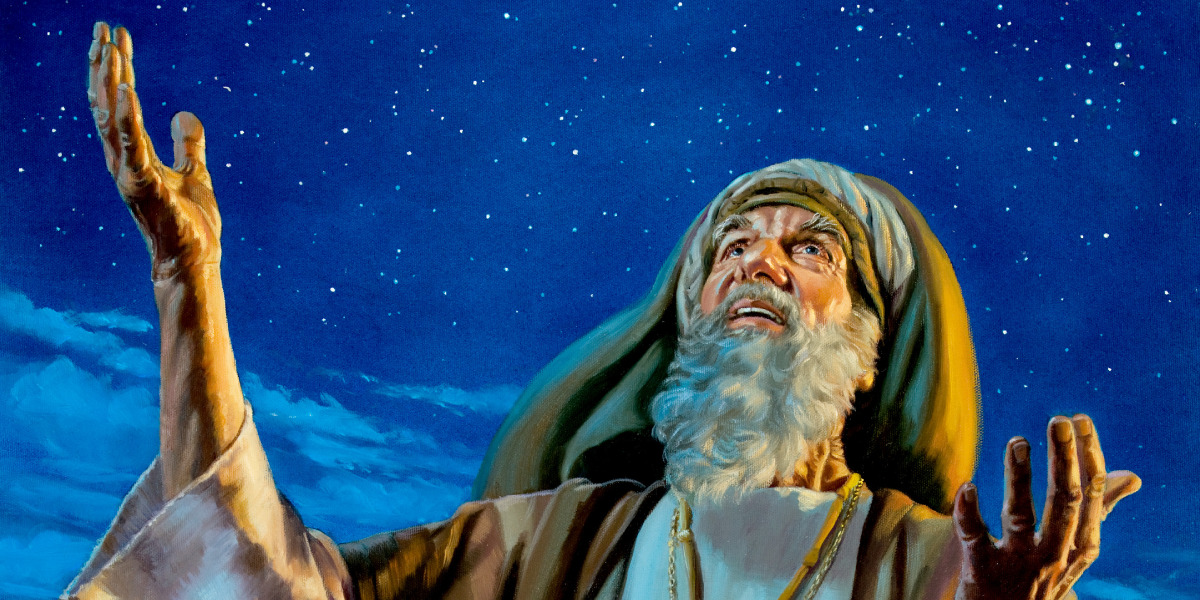
Gen 17:1-14 “And when Abram was ninety years old and nine, the LORD appeared to Abram, and said unto him, I am the Almighty God; walk before me, and be thou perfect. (2) And I will make my covenant between me and thee, and will multiply thee exceedingly. (3) And Abram fell on his face: and God talked with him, saying, (4) As for me, behold, my covenant is with thee, and thou shalt be a father of many nations. (5) Neither shall thy name any more be called Abram, but thy name shall be Abraham; for a father of many nations have I made thee. (6) And I will make thee exceeding fruitful, and I will make nations of thee, and kings shall come out of thee. (7) And I will establish my covenant between me and thee and thy seed after thee in their generations for an everlasting covenant, to be a God unto thee, and to thy seed after thee. (8) And I will give unto thee, and to thy seed after thee, the land wherein thou art a stranger, all the land of Canaan, for an everlasting possession; and I will be their God. (9) And God said unto Abraham, Thou shalt keep my covenant therefore, thou, and thy seed after thee in their generations. (10) This is my covenant, which ye shall keep, between me and you and thy seed after thee; Every man child among you shall be circumcised. (11) And ye shall circumcise the flesh of your foreskin; and it shall be a token of the covenant betwixt me and you. (12) And he that is eight days old shall be circumcised among you, every man child in your generations, he that is born in the house, or bought with money of any stranger, which is not of thy seed. (13) He that is born in thy house, and he that is bought with thy money, must needs be circumcised: and my covenant shall be in your flesh for an everlasting covenant. (14) And the uncircumcised man child whose flesh of his foreskin is not circumcised, that soul shall be cut off from his people; he hath broken my covenant.”
Predating the Law of Moses by over 500 years and withstanding the test of time, the Abrahamic covenant of surgical circumcision remained the primary conditional identifier of Abraham’s offspring/God’s chosen people until the time of Christ (Gal. 6:15). Interestingly, along with Abraham and Isaac, Ishmael, Abraham’s son by Sarah’s handmaid Hagar, was also circumcised as well as the complete household of Abraham, even servants “…which is not of thy seed”. The six sons of Keturah, Abrahams second wife (Gen 25: 1-2) as well as “the sons of the concubines, which Abraham had..” all would have been circumcised as the command “He that is born in thy house, and he that is bought with thy money…” was unambiguous.
On God’s part, the circumcision covenant included the exclusive blessing of Abraham with an abundant progeny and royal descendancy making him “a father of many nations”. Also, “…to be a God unto thee, and to thy seed after thee”. Also, God added, “And I will give unto thee, and to thy seed after thee, the land wherein thou art a stranger, all the land of Canaan, for an everlasting possession; and I will be their God. On Abraham’s part, it was his faith (Rom. 4: 9-12) as demonstrated by his severe obedience (Heb. 11: 8-9, Jam. 2: 21-24) thus winning to himself an expanded measure of opportunity and promise (Gen. 22: 17-18).
The lofty and auspicious promises of this amazing covenant hinged on this one seemingly trite by comparison condition of circumcision, with this significant caveat added at the end of the description, “And the uncircumcised man child whose flesh of his foreskin is not circumcised, that soul shall be cut off from his people; he hath broken my covenant.” Gen. 17:14. “Faith alone” was not an option for Abraham and his posterity; if one intended on going forward with God, circumcision, as with spiritual circumcision today, was mandatory, one’s faith notwithstanding.
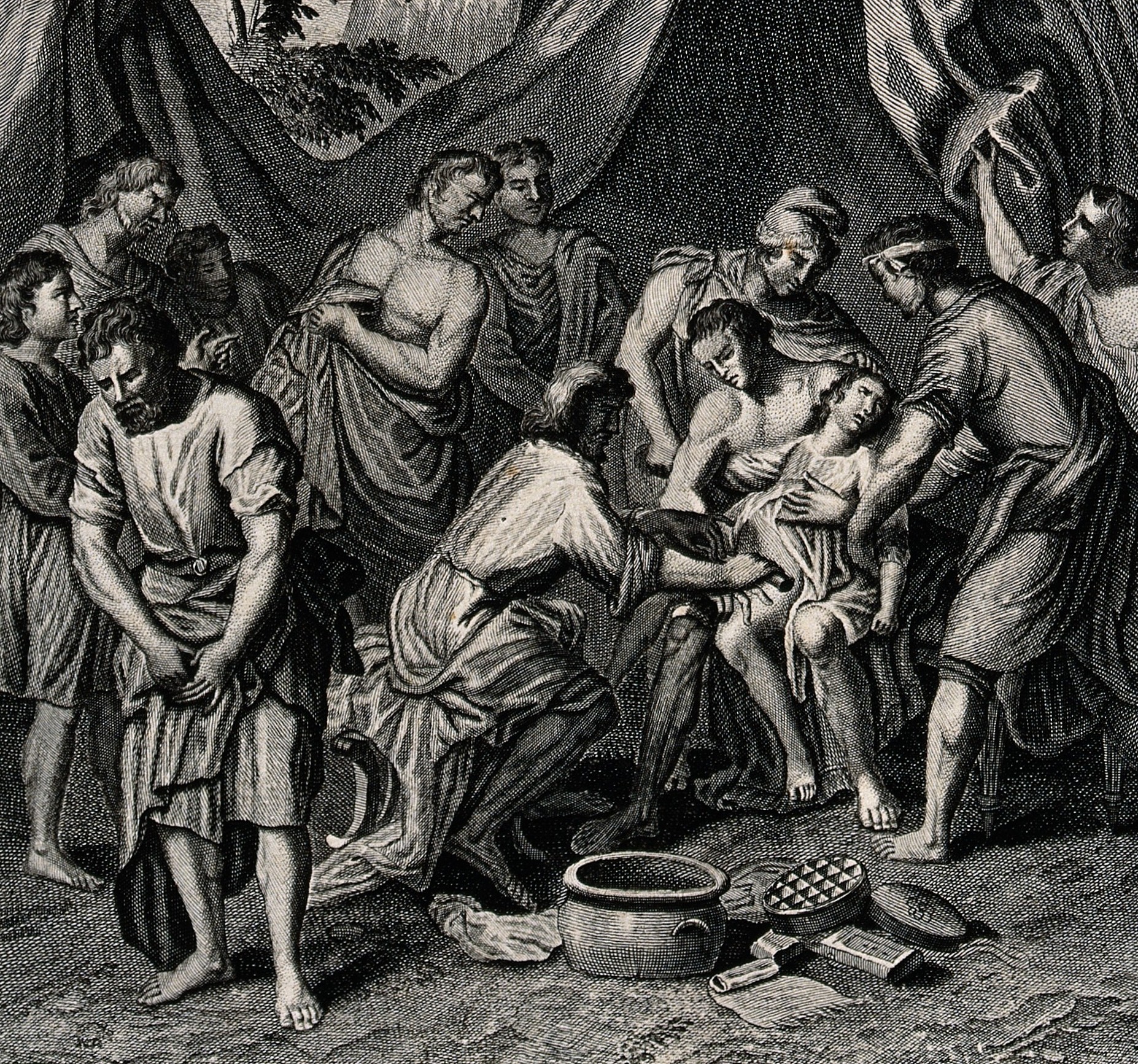
Verse 11 above states that circumcision was established as a “token” (symbol, sign) of the covenant between God and Abraham (and all descendants). As such this token became emblematic of one’s association with the covenant of the God of Abraham and as God said, the covenant was null-and-void without the token. As the next generation emerged, and though all of Abraham’s household would be circumcised, God said, “…my covenant will I establish with Isaac… (Gen. 17: 15-16, 21, Rom. 9: 7-9), who then transferred it to Jacob whose offspring endured Egyptian bondage and afterward received the Law of Moses. Then, after entering the land of promise, with an updating circumcision event no less (Jos. 5 1-9), the tribe of Judah, as prophesied (Gen. 49: 8-12), prevailed (Jud. 1: 1-2), with the term “Jew”, a derivative of the word Judah, later becoming the shortened ethnonym.
Filtered through the above-described events, God’s people emerged with 3 primary identifying characteristics, the Law, the Land, and Circumcision. Circumcision then became the fixed witness as the Land later vomited them out, and the Law, through the weakness of their flesh, failed (Rom. 8:3). So it was, that among the diaspora, a travelling or otherwise unknown Jew gained acceptance into the local synagogue with a quick reveal. Though one’s personal adherence to the Law of Moses may have been lukewarm, and though one’s land claim in Israel may have been questionable, essential circumcision on the other hand validated his belonging. Conversely, had one claimed perfection in the Law and vast tracts of tribal inheritance, a lack of circumcision would have exposed him as an imposter, as circumcision, the Abrahamic token of the covenant, served to separate God’s people from all others. No circumcision – No covenant – No Jew.
Circumcision of Christ

Even a cursory reader of the Bible knows that physical circumcision after the Abrahamic order, like the Law of Moses, ceased (or otherwise was fulfilled) with the emergence of the gospel of Jesus Christ and the advent of the New Testament church. However, the apostle Paul makes reference to another circumcision existent in the New Testament, something he called the “circumcision of Christ” (Col. 2:11). Like practically all Old Testament doctrine and events, Abrahamic circumcision is found to be a biblical “type” which correlates with its New Testament “anti-type”, the circumcision of Christ, with both being equally essential in their respective dispensations.
Col. 2:10-14 “And ye are complete in him, which is the head of all principality and power: (11) In whom also ye are circumcised with the circumcision made without hands, in putting off the body of the sins of the flesh by the circumcision of Christ: (12) Buried with him in baptism, wherein also ye are risen with him through the faith of the operation of God, who hath raised him from the dead. (13) And you, being dead in your sins and the uncircumcision of your flesh, hath he quickened together with him, having forgiven you all trespasses; (14) Blotting out the handwriting of ordinances that was against us, which was contrary to us, and took it out of the way, nailing it to his cross;”
As alluded to in the above scripture reference, the removal (putting off the body) of sins is achieved by being “Buried with him in baptism” (the circumcision of Christ). This is consistent with Mk. 1:4 “John did baptize in the wilderness and preach the baptism of repentance for the remission of sins.”, and Lk. 3:3 “And he came into all the country about Jordan, preaching the baptism of repentance for the remission of sins;” and Acts 2:38 “Then Peter said unto them, Repent, and be baptized every one of you in the name of Jesus Christ for the remission of sins…”. also Acts 22:16 “And now why tarriest thou? arise, and be baptized, and wash away thy sins, calling on the name of the Lord.”.
Though during the time of his brief ministry, John’s baptism, as the scriptures demonstrate, was effective in the elimination of a repentant’s sin, it was no longer of use however once Jesus instituted His new covenant plan of salvation, Matt. 28:19 “Go ye therefore, and teach all nations, baptizing them in the name of the Father, and of the Son, and of the Holy Ghost:“, and Luke’s version, Lk. 24:47 “And that repentance and remission of sins should be preached in his name among all nations, beginning at Jerusalem.” This transition becomes very clear as the apostle Paul upgrades some disciples of John in Acts 19: 2-5, “He said unto them, Have ye received the Holy Ghost since ye believed? And they said unto him, We have not so much as heard whether there be any Holy Ghost. (3) And he said unto them, Unto what then were ye baptized? And they said, Unto John’s baptism. (4) Then said Paul, John verily baptized with the baptism of repentance, saying unto the people, that they should believe on him which should come after him, that is, on Christ Jesus. (5) When they heard this, they were baptized in the name of the Lord Jesus.” Fairly one could ask, if John’s baptism of repentance satisfied for the remission of sins, why then did his disciples require rebaptism. This is because remission of sins is only part of the blessing as here, the marriage metaphor emerges as the church, the bride of Christ, also takes on the name of her groom (Eph. 3: 14-15, Acts 3:16, 4: 10-12, 15: 14-17).
Describing its true spiritual effects on the New Testament heirs of salvation, biblically prescribed water baptism is referenced as being “born of the water…” (Jn. 3:5), and as being “buried with him…” (Rom. 6:4). The New Testament convert also shares with Noah the saving and severing effects of being “saved by water” as the ark and flood of Noah demonstrate “The like figure whereunto even baptism doth also now save us…” (IPet. 3:20-21). Along with these analogous types, Abrahamic circumcision per Colossians 2: 11-12 (above) is also an Old Testament typological shadow of New Testament water baptism.
The Old Testament abounds with physical items and events (type) which then project into a spiritual correlation in the New Testament (anti-type). These typological metaphors are instructive in their functional purpose and meaning. This is to say that, just as physical circumcision served as a token of the covenant between Abraham/Israel, separating God’s people from all others, so spiritual circumcision, or the circumcision of Christ (water baptism in Jesus‘ name), performs the same function for spiritual Israel, God’s New Testament church (Rom. 2: 28-29, 9: 6-8) Also, note the typologically rich event of Joshua 5: 1-9; as Israel’s younger generation, born in the wilderness, required circumcision before entering the land of promise, God acknowledging its effects “This day have I rolled away the reproach of Egypt (a “type” of sin) from off you.”, likewise for the sincere repentant, water baptism in Jesus’ name, the New Testament circumcision, rolls away the reproach of spiritual Egypt (sin) (Lk. 24:47, Acts 2:38, ICor. 6: 9-11).
Acts chapter 15 records the official death knell of Abrahamic circumcision (and any required adherence to the Law of Moses), at least for the gentile church, as the chief apostles in Jerusalem, to include Peter and James (with the apostle Paul present), ruled against a pharisaical faction of the concision (v. 5) as Peter stated, “…we believe that through the grace of the Lord Jesus Christ we shall be saved…” v. 11 (thus invalidating the Law and circumcision as any means of New Testament righteousness and salvation).
However, physical Abrahamic circumcision, the God-given existential token that it was/is to the nation of Israel for many, many centuries, being rooted in their historical and religious identity and culture, a core component of Judaism itself, didn’t just automatically disappear out-of-hand. Immediately after the Acts 15 meeting officially voiding the circumcision requirement, Acts 16 opens interestingly with a circumcision event, as Paul’s evangelistic ministry pattern (“to the Jew first…“Rom. 1:16, 2: 9-10) initially took him directly to the synagogues of unconverted Jews in the cities that he visited (Acts 9: 19-20, 13:5, 14, 14:1, 17:1-2, 10, 17:17, 18:4, 18:19, 19:8), entry would require fellow-traveler and young “half-gentile” Timothy to take one for the team so-to-speak (Acts 16:3, ICor. 9: 19-20) (Evangelistic “situational ethics” allowed Titus to avoid circumcision Gal. 2: 3-5). Acts 21: 17-22 indicates that for the Jews, circumcision remained central to their identity and devotion to God. Also in his epistles, Paul, contending with the Judaizers, continued to address the inefficacy of physical Abrahamic circumcision for the church going forward (Rom. 2: 25-29, ICor. 7: 18-19, Gal. 5:6, 6:15, Php. 3:3, Col. 2: 11-13, 3: 10-11). For the saints of God in the New Testament church, water baptism in Jesus’ name is the only circumcision you will ever need, with full immersion being the mode and the name of “Jesus” being the severing tool.
GS
 A Fine Tune
Leave a comment