Bible Students will be aware of the many metaphorical-natured, Old-to-New Testament correlating truths “hidden” in the Bible known as “Types and Shadows”. Often eluding the casual Bible reader, these rich exegetic truths that are mined from below the surface-text of the scriptures so-to-speak, usually comprise the lesson plan of a formal Bible teacher or an instructional book.
Depending on the thoroughness of one’s study, Old to New Testament Type-and-Shadow correlations can get quite extensive. For example, down to its finest detail, the Tabernacle of Moses, though an earthly apparatus, resonates with eternal truth sourced from heaven and manifests as corresponding anti-typological spiritual truths in the New Testament…
Heb 8: 4-5 “…there are priests that offer gifts according to the law: (5) Who serve unto the example and shadow of heavenly things, as Moses was admonished of God when he was about to make the tabernacle: for, See, saith he, that thou make all things according to the pattern shewed to thee in the mount.”
Biblical, pre-Mosaic events as well as the Law of Moses reflect the eternal truth of God. The Law governed Israel while simultaneously pointing to the future, specifically to the Gospel of Jesus Christ…
Heb. 10:1 “For the law having a shadow of good things to come, and not the very image of the things…“
Paul’s epistles record his ongoing contention with the “Judaizers”–those who insisted on keeping Moses’ Law in conjunction with the Gospel of Jesus Christ. Admonishing the church in Colossae to reject their error, Paul states that these Old Covenant items foreshadowed a spiritual antitype in Christ…
Col 2:16-17 “Let no man therefore judge you in meat, or in drink, or in respect of an holyday, or of the new moon, or of the sabbath days: (17) Which are a shadow of things to come; but the body is of Christ”.
Here’s that same passage in the Easy-to-Read (ETR) version of the Bible: Col. 2: 16-17 “So don’t let anyone make rules for you about eating and drinking or about Jewish customs (festivals, New Moon celebrations, or Sabbath days). (17) In the past these things were like a shadow that showed what was coming. But the new things that were coming are found in Christ”.
To summarize, Types and Shadows study is an analysis of an actual and physical Old Testament item or event with its corresponding New Testament spiritual representation of that same item or event, with the Old Testament item being considered the “type” (also shadow), the corresponding New Testament truth its “antitype”. The study and awareness of biblical types and shadows serve to instruct and undergird the Bible student, fortifying him with more than just a surface knowledge of the scripture.
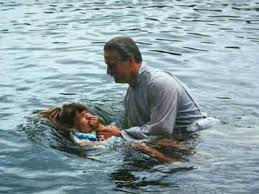
Given its significance in the New Testament salvation schematic, it is not surprising that water-baptism is not only typologically represented in the Old Testament and pre-Mosaic eras, but its typological shadow is featured as the central event in some of the most significant events in all of the Old Testament narrative. We are not left to our own surmising, as Noah’s ark, Abraham’s circumcision, Moses’ Red sea, the Tabernacle’s laver, and Christ’s burial all have scriptural citation as to their “baptism” typology. Each item or event served to accomplish its designed purpose while simultaneously pointing forward to New Testament water baptism.
- Noah’s Ark
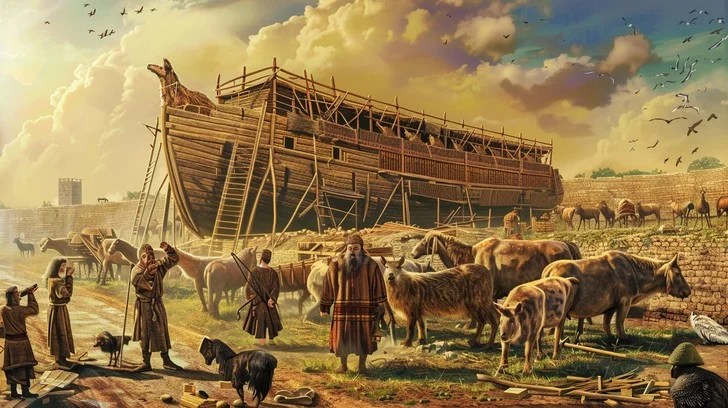
More than a children’s Sunday School Bible lesson, the Old Testament story of Noah’s ark has New Testament significance. Anybody reading this article is going to know about the events that characterized Noah’s life and amazing experience in the Bible, however, fewer will know that the apostle Peter writing in his first epistle said this…
IPet. 3: 20-21 “…the longsuffering of God waited in the days of Noah, while the ark was a preparing, wherein few, that is, eight souls were saved by water. (21) The like figure whereunto even baptism doth also now save us (not the putting away of the filth of the flesh, but the answer of a good conscience toward God,) by the resurrection of Jesus Christ:”
Using the phrase “the like figure”, Peter indicates a “type/antitype” connection associating the saving action of Noah’s ark with the saving action of New Testament water baptism. Though many tradition-laden, “cultural Christians” contend with the truth of IPet. 3: 20-21, the biblical wording is clear and concise and there for all to see. Also, its truth is not isolated to this singular reference, just the opposite, as water baptism is established as a foundational doctrine of the church, with its purpose and efficacy clearly explained (Mk. 16:16, Acts 2:38, Rom. 6:4, etc.).
When submitted to in conjunction with repentance from sin, New Testament water baptism (submersion in water while invoking the name of Jesus, Acts 2:38, 8:16, 10:48, 19:5, 22:16), has a similar effect on a person as Noah’s ark did on him and his family—facilitating the beginning of a new life while washing away the old. “Therefore if any man be in Christ, he is a new creature: old things are passed away; behold, all things are become new.” IICor. 5:17. Also, “Know ye not that the unrighteous shall not inherit the kingdom of God? Be not deceived: neither fornicators, nor idolaters, nor adulterers, nor effeminate, nor abusers of themselves with mankind, (10) Nor thieves, nor covetous, nor drunkards, nor revilers, nor extortioners, shall inherit the kingdom of God. (11) And such were some of you: but ye are washed, but ye are sanctified, but ye are justified in the name of the Lord Jesus, and by the Spirit of our God.” ICor. 6: 9-11.
Also, expanding on the typological pattern, after Noah’s “baptism” God entered into a covenant with Noah promising not to destroy the world again with a flood (Gen. 9: 8-17), “in like manner” the New Testament salvation seeker emerges from his “flood” resurrected into a promise of eternal life via the Holy Spirit (Lk. 24:49, Acts 1:4, Acts 2: 38-39, Gal 3:14, Eph. 1:13, etc.) “And this is the promise that he hath promised us, even eternal life.” IJn. 2:25.
2. Abraham’s Circumcision
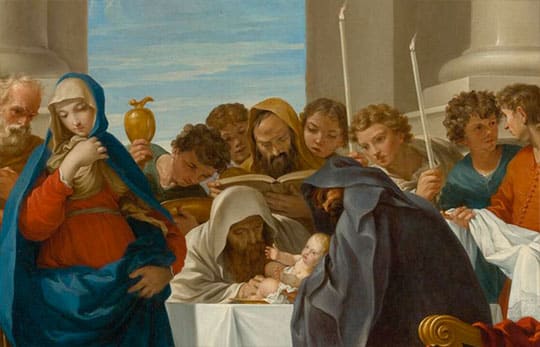
Col 2:11-12 “In whom also ye are circumcised with the circumcision made without hands, in putting off the body of the sins of the flesh by the circumcision of Christ: (12) Buried with him in baptism, wherein also ye are risen with him through the faith of the operation of God, who hath raised him from the dead.”
Firstly, verses 11 and 12 of Colossians 2 are not two separate, unrelated statements, they are connected by a colon (also, be reminded that chapter and verse divisions in the Bible were not included in its original composition). In this application, the colon is a punctuation mark indicating that which comes after the colon is associated with and is an explanation of that which came before the colon. This is to say that, just as circumcision served to physically mark and separate Abraham and his progeny from the rest of the world’s population (gentiles), so in the church age, biblically correct water baptism (submersion while invoking the name of Jesus) spiritually severs God’s people (church) from the rest of the world’s population. During and consequent to biblically correct water baptism, a true spiritual event occurs–the remission of sins (Also, the church as a bride taking the name of her groom, Eph. 3: 14-15, another study for another time).
There are a couple of Bible verses that emerge early in the book of Acts/church age which highlight a great truth concerning the name of Jesus… Acts 3:16 “And his name through faith in his name hath made this man strong, whom ye see and know: yea, the faith which is by him hath given him this perfect soundness in the presence of you all.” And Acts 4:12 “Neither is there salvation in any other: for there is none other name under heaven given among men, whereby we must be saved“. Also, Solomon said “The name of the LORD is a strong tower: the righteous runneth into it, and is safe.” Pro. 18:10. To be “circumcised” unto God via New Testament water baptism, submersion in water is the biblical mode, but the name of Jesus is the severing tool.
If “an outward sign of an inward grace” –that ever bapti-virtuous mantra of America’s traditional “Christio-religion”, is your water-baptism objective, I presume any mode and any name (titles) would do you service, but if the remission of sins (Lk. 24:47, Acts 2:38, 22:16) and being separated unto God is your desire, the name of Jesus is the only “name under heaven given among men, whereby we must be saved“.
Lastly, God was very serious about circumcision for Abraham and his offspring as revealed in Gen. 17:14… “And the uncircumcised man child whose flesh of his foreskin is not circumcised, that soul shall be cut off from his people; he hath broken my covenant”. Likewise Jesus, shedding his blood for the remission of sins (Matt. 26:28), is very serious about water baptism… “He that believeth and is baptized shall be saved; but he that believeth not shall be damned.” Mk. 16:16
3. Moses’ Red Sea
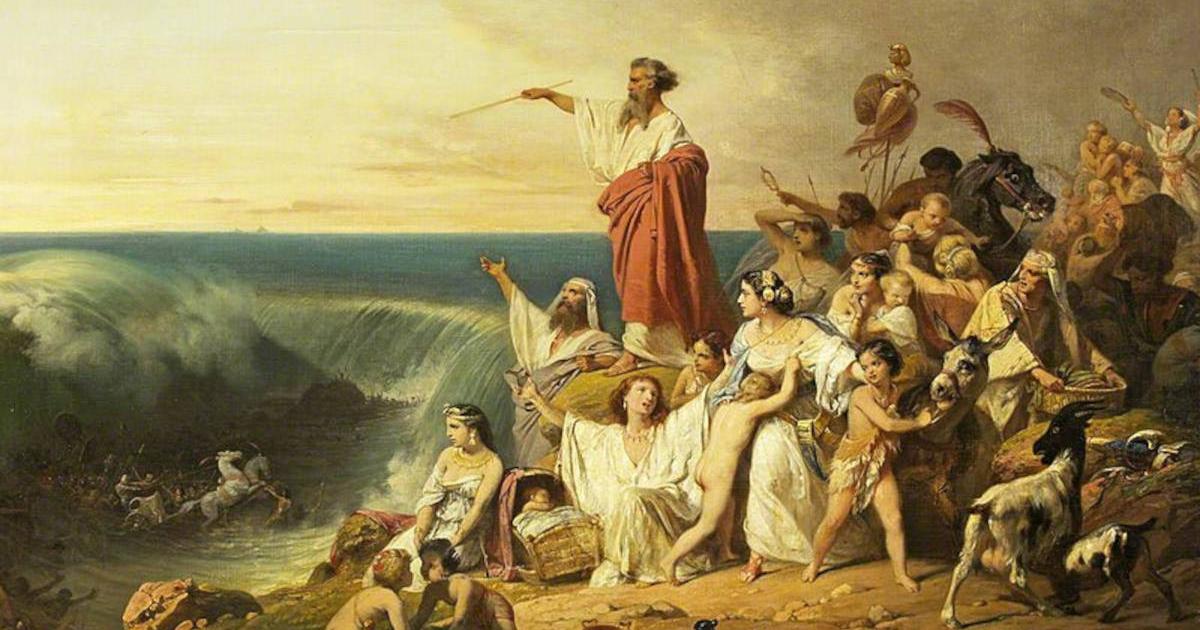
1Cor. 10: 1-2 “Moreover, brethren, I would not that ye should be ignorant, how that all our fathers were under the cloud, and all passed through the sea; (2) And were all baptized unto Moses in the cloud and in the sea;”
Considered to be one of the most significant events in the Bible, Israel’s deliverance from Egypt is rich with typological imagery depicting New Testament salvation doctrine. Enslaved and serving the Egyptians with rigor, Israel’s bondage in Egypt represents a “type” of life in sin. Moses, as a “type” of Jesus, confronts and defeats pharaoh, a devil-like tyrant, winning deliverance for God’s people. The Passover lamb is slain and its blood is applied to the doorways of Hebrew homes preventing their destruction, an obvious typological allusion to the Lamb of God, Jesus, his blood being shed on the cross (on Passover btw) providing deliverance for his people. And then it was on to the Red Sea…
“And were all baptized unto Moses in the cloud and in the sea;“, this then typologically depicting New Testament baptism “unto Jesus” in the water and Spirit effecting the completion of deliverance from sin (Egypt). Just as “Pharaoh’s chariots and his host hath he cast into the sea” (Ex. 15:4), and just as “the sea overwhelmed their enemies.” (Psa. 78:53), so the sin’s of New Testament converts are forever removed “by the washing of regeneration, and renewing of the Holy Ghost”, as Titus 3:5 states “…but ye are washed, but ye are sanctified, but ye are justified in the name of the Lord Jesus, and by the Spirit of our God.” ICor. 6: 9-11.
Just as God miraculously opened up the Red sea to allow the children of Israel to escape the oppression, slavery and death of Pharoah, so water baptism, when performed according to the biblical formula (in conjunction with sincere repentance and while invoking the name of Jesus), facilitates a miraculous deliverance from the devil, sin, and death, allowing one to escape their old, sinful, hell-bound life into a new, purpose-filled, joyful, eternal life.
“And now why tarriest thou? arise, and be baptized, and wash away thy sins, calling on the name of the Lord.” Acts 22:16
4. Tabernacle’s Laver
Ex. 25:8-9 “And let them make me a sanctuary; that I may dwell among them. (9) According to all that I shew thee, after the pattern of the tabernacle, and the pattern of all the instruments thereof, even so shall ye make it.”
Heb 8: 4-5 “…there are priests that offer gifts according to the law: (5) Who serve unto the example and shadow of heavenly things, as Moses was admonished of God when he was about to make the tabernacle: for, See, saith he, that thou make all things according to the pattern shewed to thee in the mount.”
Fundamental to the Human story is the deadly blight of sin and violation against God. However, fundamental to God’s story is forgiveness, thankfully. Just as the ark, a plan of God, but a product of Noah’s faith and obedience, was a vehicle that facilitated God’s saving grace, so the Tabernacle of Moses, God’s architectural design, but built by Israel, was a vehicle whereby forgiveness could be obtained (Lev. ch.’s 4 and 5, etc.) and fellowship with God experienced.
The scriptures tell us that Moses’ Tabernacle in the wilderness was not just a random tent compound haphazardly cobbled together with whatever happened to be laying around on the ground. Down to its very last detail the Tabernacle, God’s Old Testament vehicle whereby he would dwell with his people (Ex. 25:8, Ex. 29: 42-45), was designed by God and represented “heavenly things”, foreshadowing New Testament experience and doctrine.
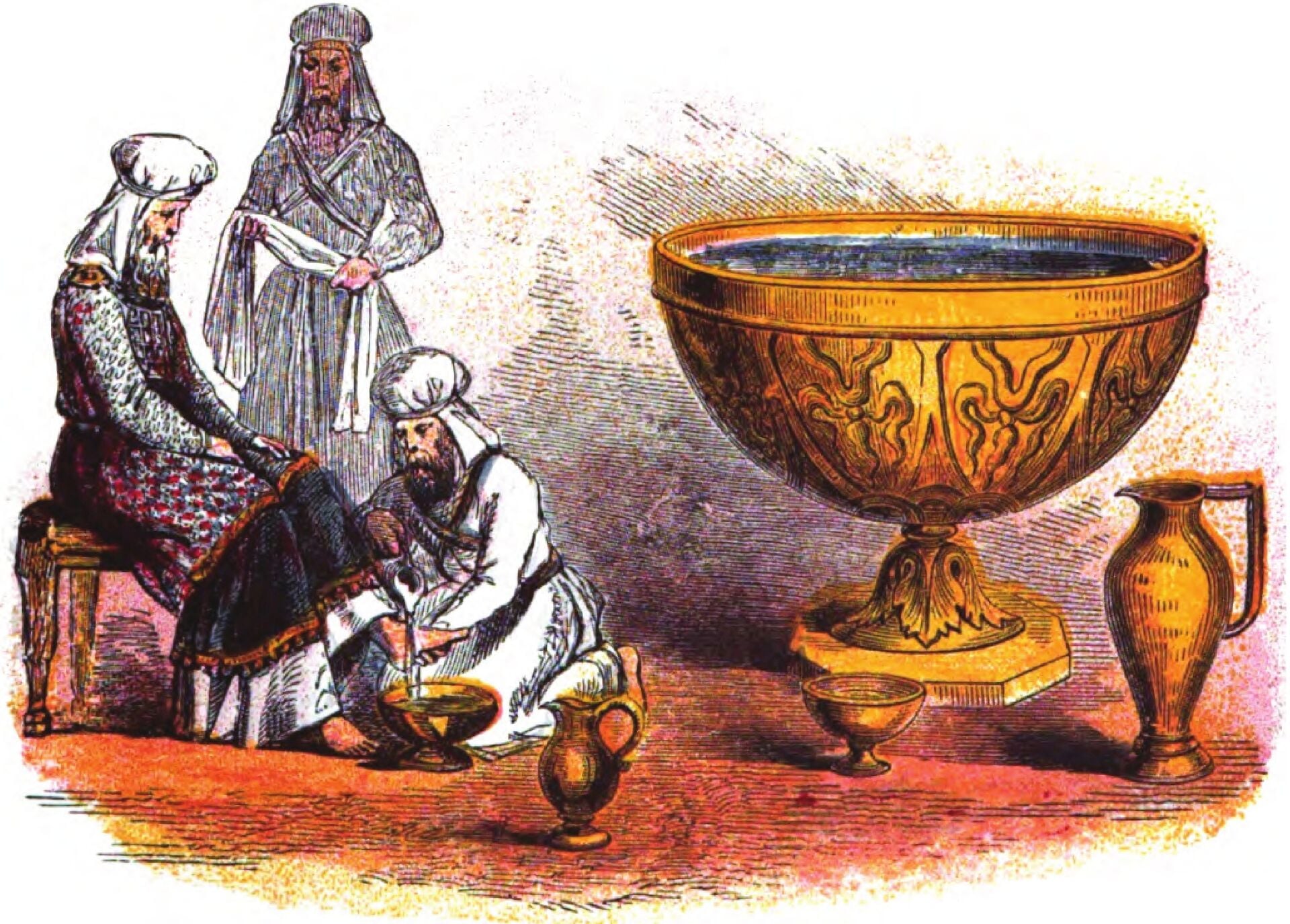
The divinely arranged Tabernacle complex consisted of various furnishings which were essential to its purpose and function, with all having typological significance. Positioned between the brazen altar and the holy place (aka. “the first tabernacle” (Heb. 9:6), which contained the altar of incense, the golden candlestick, and the table of shewbread), was the brazen laver.
Exo 30: 17-21 “And the LORD spake unto Moses, saying, (18) Thou shalt also make a laver of brass, and his foot also of brass, to wash withal: and thou shalt put it between the tabernacle of the congregation and the altar, and thou shalt put water therein. (19) For Aaron and his sons shall wash their hands and their feet thereat: (20) When they go into the tabernacle of the congregation, they shall wash with water, that they die not; or when they come near to the altar to minister, to burn offering made by fire unto the LORD: (21) So they shall wash their hands and their feet, that they die not: and it shall be a statute for ever to them, even to him and to his seed throughout their generations.”
Both the function and the positioning of the laver resonate loudly with typological truth relating to New Testament water baptism. Placed between the altar and the “tent of the congregation”, the laver is where the priest was required to wash (hands and feet) before progressing into the holy place. God was adamant about this step in the priestly process as a priests hands and feet would come into physical contact with the ground and components of the holy place, e.g. “they shall wash their hands and their feet, that they die not:“. Death awaited the priest who deigned to enter the holy place without first washing at the laver. The severe tone of this threat is consistent with God’s warning to Abraham concerning circumcision (Gen. 17:14), and Jesus’ words concerning water baptism (Mk. 16:16), not to mention the consequences of refusing the “baptisms” of Noah and the Red Sea.
This pattern is clearly reflected in the New Testament salvation doctrine process of repentance, water baptism, and Holy Spirit infilling, or as the apostle Peter put it on the Day of Pentecost… “Then Peter said unto them, Repent, and be baptized every one of you in the name of Jesus Christ for the remission of sins, and ye shall receive the gift of the Holy Ghost.” Acts 2:38.
According to the pattern…
| Tabernacle Type | Gospel | NT Anti-type |
| Brazen altar | Death | Repentance |
| Brazen laver | Burial | Water baptism |
| Holy Place | Resurrection | Holy Spirit |
| Holiest of Holies | Rt. hand of the Father | Heaven |
5. Christ’s burial
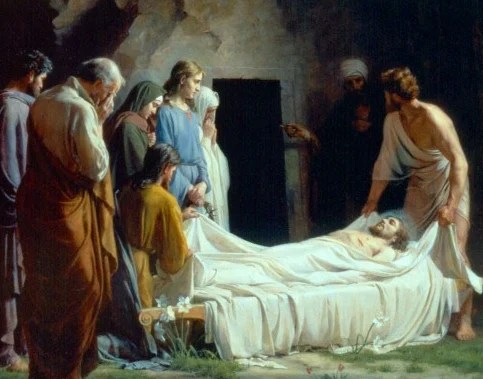
“Know ye not, that so many of us as were baptized into Jesus Christ were baptized into his death? (4) Therefore we are buried with him by baptism into death: that like as Christ was raised up from the dead by the glory of the Father, even so we also should walk in newness of life.” Rom. 6: 3-4
“Buried with him in baptism, wherein also ye are risen with him through the faith of the operation of God, who hath raised him from the dead.” Col. 2:12
The above scriptures are more indication that something spiritual, transformational, and extremely significant happens when someone is properly baptized in accordance with the biblical directive. Biblically correct water baptism is much more than just feeling religious or joining a church or an “outward sign of a… blah blah blah”. When submitted to in conjunction with repentance, water baptism as taught by the scriptures is “for the remission of sins” (Acts 2:38), is to “wash away thy sins” (Acts 22:16), is “putting off the body of the sins of the flesh” (Col. 2:11), etc.
The death, burial, and resurrection of Jesus Christ, the Gospel, are the seminal events from which the church is born and sustained. As such the burial of Christ, as a typological event, resonates much more deeply for the church than the other types. Though the other typological events depict New Testament salvation, the Gospel of Christ IS that salvation. Noah’s ark, Abraham’s circumcision, Moses’ crossing of the Red sea, the tabernacle’s brazen laver, and Christ’s burial all point to a vital part of the New Testament salvation process as demonstrated in the book of Acts and taught by the apostles. That is, just as these Old Testament “types” represented their own chapter in a wider story of God’s saving plan, so water baptism, sandwiched between one’s initial repentance and Holy Spirit infilling, is included in the New Testament doctrine of salvation.
When someone engages in “repentance toward God”, that is, the cessation from sin and its corruption and flesh-pleasing, self-willed lifestyle, this can be characterized in the Bible as putting off the “old man” (Eph. 4:22, Col. 3:9). Romans 6:6 states it this way “…our old man is crucified with him”, and for these following reasons “…that the body of sin might be destroyed, that henceforth we should not serve sin.” (Gal. 2:20, 5:24, 6:14).
After Jesus was crucified he was buried. Likewise, after we are crucified (“with him”, in repentance), “…we are buried with him by baptism into death” as the gospel pattern of Christ is being replicated in each one of us, and as the remainder of that verse says “…that like as Christ was raised up from the dead by the glory of the Father, even so we also should walk in newness of life.” We are crucified with him in repentance, buried with him in water baptism, and raised with him in Holy Spirit infilling.
CONCLUSION
This short study of 5 “Types” of Water Baptism indicates that biblically correct New Testament water baptism isn’t just some stuffy church tradition or an optional “feel good” religious ceremony, but it is a central and essential component to New Testament salvation doctrine.
GS


Leave a comment